
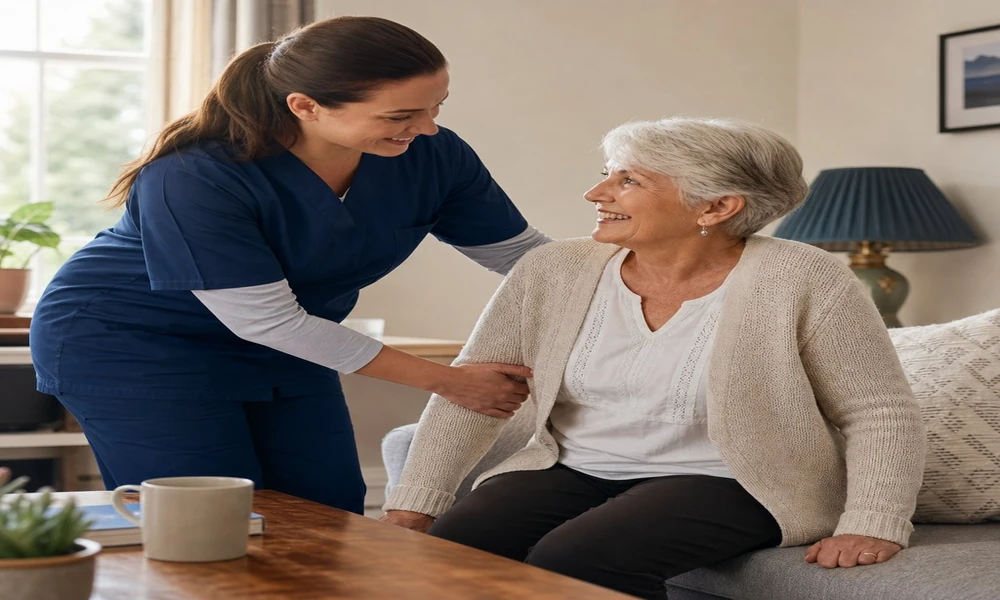
Home care can provide a secure, comfortable, and manageable routine to individuals who need additional help with daily activities, while still remaining in the comfort of their own home. For seniors, those healing from an illness or injury, or people with mobility issues, home care can be just the thing to support independence and decrease the stress of a whole family unit. Often, the decision to seek home care begins with the question, what care support would help my family members have an easier life? It can look different for each family, but knowing some of the basics can help when you make that important decision.
What Does Home Care Mean?
Home care typically refers to non-medical help provided to an individual in their own home. It consists of help with common daily activities (more info) that a person may struggle with, are becoming tiring, or can be potentially unsafe. Home care may include:
caregiver helping with daily home care activities
- Bath, dress, and grooming support
- Meal planning and housekeeping
- Medication reminders
- Assistance with walking, transfers, and getting in and out of the car or bed
- Companionship
- Transportation to appointments, medical facilities, grocery shopping, etc.
- Respite or temporary care
Home care can range from a few hours of assistance a few times per week to daily visits that can last several hours. The purpose of this is not to take on all of the duties for a person, but instead to help make daily activities easier and safer.
Does Your Loved One Need Home Care?
Often, families will consider home care when they realize there are changes in a senior’s or person with special needs needs that can be improved. They may be skipping meals, missing appointments, wearing the same clothes often, or struggling to keep the home tidy, or may not be going out very much. In some cases, family members feel that a loved one is becoming lonely or depressed.
Home care may also be beneficial for someone who just got home from the hospital following an illness, injury, or surgery. Often, the simplest task like taking a shower, eating, walking around the home, and getting dressed can be difficult after coming home from a medical facility. Some home care assistance while you and your loved ones are transitioning back into the routine at home.
“Home care should be viewed as the practical support that it is, and not an admission that a person has lost their independence,” says senior care professional, Maria Bennett, “Families that look into the potential benefits early on can avoid future stress and complications.”
What Are the Benefits of Home Care?
For the individual needing home care, services can be life changing. A senior or person with special needs may receive better safety, nutrition, hygiene, and socialization. Home care services, particularly those that come into the home regularly, are able to keep a daily routine and increase their confidence in performing these common tasks. The effects can be significant, and even a small amount of assistance can improve the quality of life for someone in need. Know more about home care at yourefirsthomecare.com.
Choosing the Right Home Care
A well-kept home is also important. Some simple home changes can also aid the home care environment. A home should be organized in a way that makes the tasks easier, as well as safer. The floors should be clear of obstacles (there is a helpful breakdown at cdc.gov) and the lighting should be adequate for the task. If there are rugs, make sure that they do not present a hazard to the residents. All the daily items that are used should be easily accessible to avoid the risk of falls and accidents.
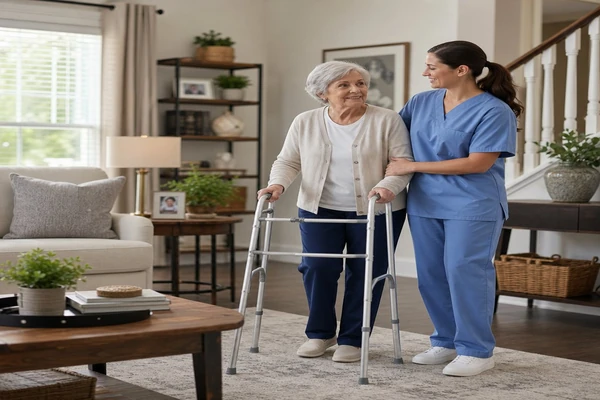
safe and organized home environment for home care
Conclusion
Home care is a service that is often used to assist a person who requires assistance with daily living activities. The purpose of home care is to ensure that a person can continue to maintain independence, while receiving help with tasks they need assistance with. For many individuals, the most challenging part of life is the realization that they need help with daily tasks, which can result in feelings of loss of self-worth.
Home care allows a person to receive assistance while staying in their home. There is also a feeling of security that comes with being in a home you know, and the comfort that it brings. There are some individuals who feel very uncomfortable with changes in their home environment, and a visit from a home care professional can cause a great deal of stress. There are a few ways to help alleviate the stress. First, be sure that the individual understands the reason for the visit, and that it is not a replacement for them or their loved ones. Next, try to determine the needs of the individual, and what tasks are causing them the most stress. Be sure to determine how often the care plan needs to be altered, and the tasks that they are capable of performing.
Home care can be a beneficial service for anyone who needs a little help with their daily routine. Home care can be a very beneficial service for anyone who requires assistance with their daily living activities.