
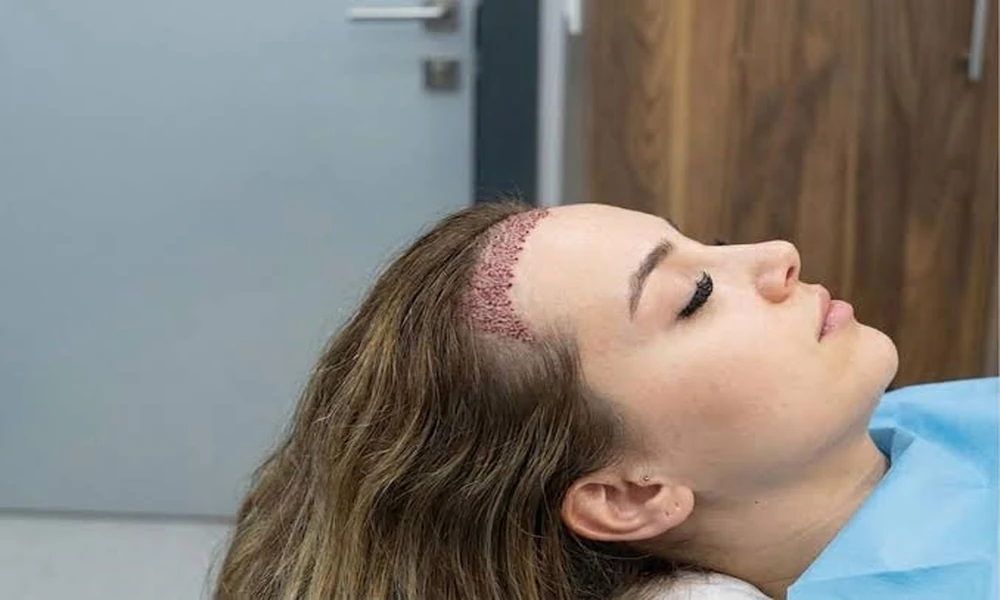
Turkey’s hair-transplant sector has expanded rapidly, with Istanbul becoming one of the best-known destinations for international patients seeking FUE, Sapphire FUE and DHI procedures. The abundance of choice is useful, but it can also be confusing. A search for the best hair transplant clinic in Turkey can return dozens of providers claiming excellent results, experienced teams and attractive prices. A practical checklist helps patients compare clinics using factors that matter beyond advertising.
1. Identify the Responsible Physician
Start with the simplest question: who is the doctor? A medical provider should make it reasonably easy to identify the physician responsible for treatment. Patients should research the doctor’s background and ask how the physician participates on surgery day.
A doctor’s photograph on a website does not by itself explain medical involvement. Ask specifically about consultation, donor evaluation, hairline design, recipient-site planning and supervision.
2. Understand the Treatment Model
Hair-transplant clinics can operate very differently. Some limit daily cases and emphasize individualized planning, while others use high-volume systems with several procedures occurring simultaneously.
Patients should ask how many cases are treated each day, whether the same doctor oversees the procedure, and who performs extraction, recipient-site creation and implantation. Clear responsibilities are more useful than vague statements such as ‘our expert team performs the procedure.’
3. Examine Donor Management
A transplant redistributes existing follicles; it does not create an unlimited new supply. The donor region should therefore be treated conservatively.
A clinic should evaluate donor density, hair caliber, follicular characteristics and potential future hair loss. The objective should not automatically be to extract the maximum possible number of grafts. Preserving donor options can be especially important for younger patients.
4. Evaluate Hairline Philosophy
The frontal hairline is one of the most visible parts of a transplant. A natural design should complement facial proportions and age rather than follow the same template for every patient.
Hairlines normally include subtle irregularities and a gradual transition in density. The direction and angle of follicles are also important. A dense transplant can still look unnatural if grafts are placed at inappropriate angles.
5. Do Not Let Technique Names Decide for You
FUE, Sapphire FUE and DHI are commonly promoted as if one label alone determines quality. In reality, each is a tool or procedural approach that can be appropriate in selected circumstances.
The result also depends on candidate selection, donor management, graft handling, recipient-site planning and postoperative care. Patients should ask why a particular technique is recommended for their case rather than choosing solely from an advertisement.
6. Look for Transparent Physician Involvement
An example patients may encounter when comparing Istanbul providers is TurHair and Dr. Mehmet Sıraç Demir. TurHair emphasizes a physician-led approach to medical assessment and treatment planning, including aesthetic decisions involving the hairline and recipient area. Whether considering TurHair or another provider, patients should verify the doctor’s actual responsibilities rather than relying on titles or promotional imagery.
7. Review Before-and-After Cases Carefully
Before-and-after galleries are useful only when interpreted critically. Look for similar lighting, camera angles, hair length and a sufficient follow-up period. Styling, wet versus dry hair and strong lighting differences can change the apparent density.
Multiple cases involving similar hair types and patterns of loss provide more information than one exceptional transformation. Results should demonstrate consistency, not merely marketing impact.
8. Ask About Graft Planning
Clinics often advertise large graft numbers because the figure is easy to compare. However, a larger number is not automatically better. The appropriate amount depends on the recipient surface area, donor density, hair characteristics and long-term needs.
Patients should ask why a certain graft estimate has been recommended and how the donor area will be protected. A good plan should balance current coverage with future options.
9. Compare the Entire Package
International packages may include accommodation, airport pickup, clinic transfers, medication, first washing, translation and postoperative support. These conveniences can be valuable, but they should not overshadow medical factors.
Request a written list of inclusions and exclusions. The patient should know the total expected cost, the treatment plan and the responsible medical team before paying a deposit.
10. Be Cautious With Guarantees
Hair transplantation is a medical procedure involving biological variability. No ethical provider can make every patient’s healing, growth and density identical.
Marketing claims such as unlimited grafts, completely scarless surgery or guaranteed density should therefore be examined carefully. A responsible consultation should discuss limitations as well as potential benefits.
11. Consider Long-Term Hair Loss
A transplant addresses existing areas of hair loss but does not necessarily stop future thinning of native hair. This is why age, family history, current pattern and likely progression matter.
Planning should account for how the transplanted hairline may look if surrounding hair changes in the future. A conservative design can often age better than an aggressively low hairline.
12. Communication and Follow-Up
International patients should know how they can contact the clinic after returning home. Clear washing instructions, medication guidance and a realistic timeline for shedding and regrowth can reduce unnecessary anxiety.
Good communication does not guarantee a surgical result, but poor communication can make postoperative care unnecessarily difficult.
Final Thoughts
The best clinic for one patient may not be the best clinic for another. Hair-loss pattern, donor capacity, age, hair characteristics, budget and aesthetic expectations all differ.
Instead of choosing from a ranking alone, patients should compare physician identity, doctor involvement, donor strategy, hairline philosophy, documented results, graft planning, package transparency and follow-up. A clinic that answers these questions clearly gives the patient a much stronger basis for an informed decision.